 Dowry Calculator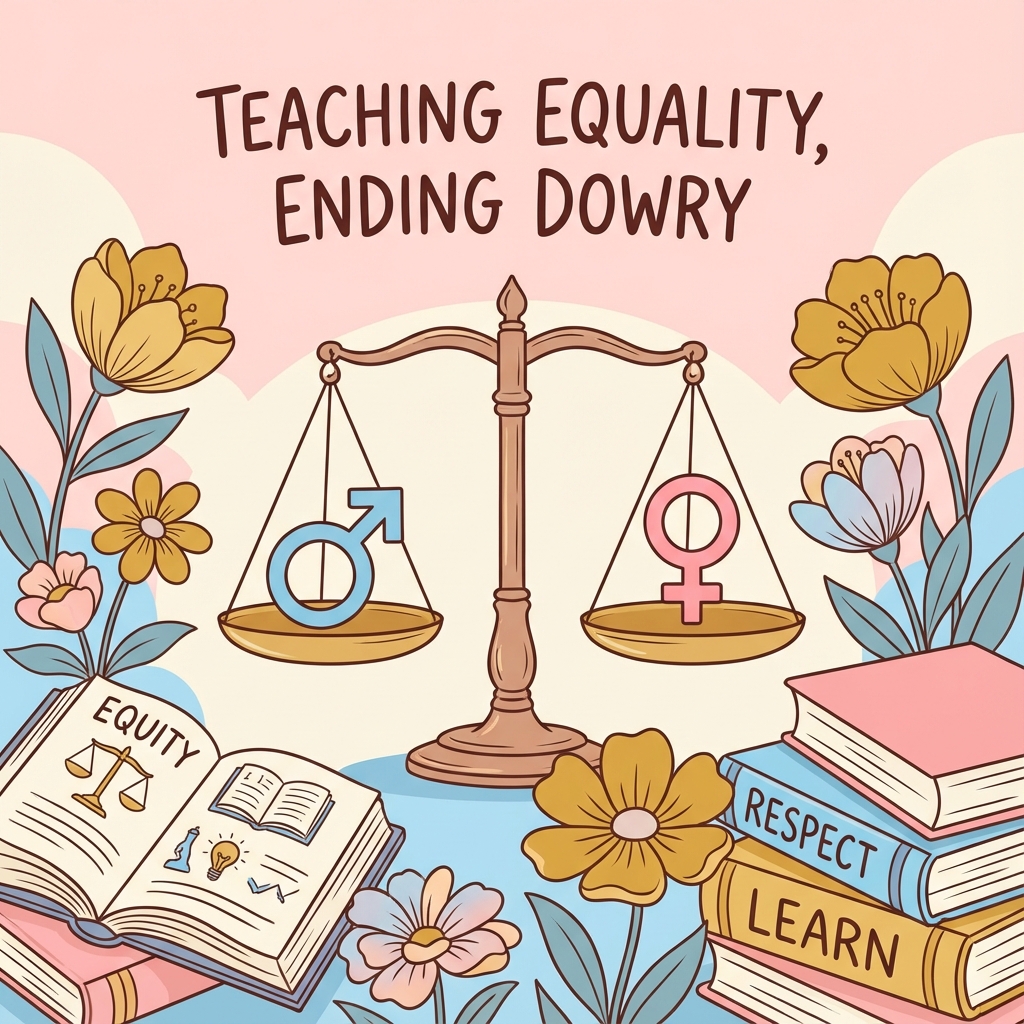
The fight against dowry doesn't start with wedding negotiations—it starts in childhood. When we raise children who see all genders as equal, dowry becomes unthinkable. Here's how parents and educators can nurture equality from day one.
Why Early Education Matters
Research shows that children begin developing gender concepts as early as 2-3 years old. By age 5-6, many gender stereotypes are already firmly established. This means we have a crucial window to shape healthy attitudes before harmful beliefs take root.
Children who grow up believing boys are "worth more" than girls will naturally see dowry as logical. Conversely, children who understand gender equality will reject dowry as the absurdity it is.
Age-Appropriate Approaches
Ages 3-5: Building the Foundation
- Equal toys and activities: Don't restrict toys by gender—let all children play with dolls, trucks, cooking sets, and building blocks
- Diverse books and media: Choose stories with strong characters of all genders in various roles
- Model equality at home: Let children see all adults cooking, cleaning, working, and caring for others
- Challenge stereotypes gently: When they say "that's a boy thing," explain that activities are for everyone
Ages 6-10: Developing Understanding
- Discuss fairness: Use age-appropriate scenarios—"Would it be fair if only boys got toys on their birthday?"
- Teach about achievements: Share stories of accomplished people of all genders in all fields
- Involve in household tasks equally: Boys learn to cook and clean; girls learn repairs and finances
- Encourage all interests: Support sports, arts, science, and humanities regardless of gender
Ages 11-14: Critical Thinking
- Discuss media representation: Analyze how movies, ads, and shows portray gender roles
- Talk about discrimination: Age-appropriate discussions about unfair treatment based on gender
- Introduce dowry concept: Explain what it is, why it's wrong, and why it's illegal
- Encourage speaking up: Practice standing up against unfair comments or treatment
Ages 15-18: Active Engagement
- Deeper legal discussions: Explain dowry laws, women's rights, and current events
- Future planning: Discuss marriage as partnership, not transaction
- Peer influence: Help them become advocates among friends
- Real-world examples: Discuss news stories about dowry cases and their consequences
Conversations That Change Minds
Here are some conversation starters for different ages:
For young children: "Everyone in our family is equally important. We don't love anyone more because of whether they're a boy or girl, do we?"
For pre-teens: "Some people think families should pay money when their daughter gets married. What do you think about that? Does that seem fair to you?"
For teenagers: "When you grow up and decide to get married, what qualities would you want in a partner? Notice how none of us mentioned money from their family—that's because love and respect matter, not what someone's parents can give."
Addressing Relatives and Social Pressure
Children often hear problematic comments from extended family or society. Handle these moments as teaching opportunities:
- If someone says "girls are paraya dhan" (others' wealth), calmly explain to your child later why this thinking is outdated
- When relatives treat sons differently, discuss why your family chooses equality
- Use media examples to reinforce your values
- Create a safe space for children to ask questions about confusing messages they receive
Activities and Exercises
Practical activities to reinforce gender equality:
- Role reversal games: Act out scenarios with reversed gender expectations
- Career collages: Create collages of people of all genders in all professions
- Fair sharing exercises: Practice dividing resources equally in games
- Story rewriting: Take traditional tales and rewrite with equal gender roles
- Chore rotation: Ensure all children do all types of household tasks
For Educators
Teachers and schools can reinforce these values through:
- Mixed-gender group activities and team assignments
- Curriculum that highlights achievements of all genders
- Addressing gender bias in classroom dynamics
- Parent engagement on gender equality topics
- Celebrating diversity and inclusion